The Philippine Disaster Resilience Foundation (PDRF) is working with the Baguio City government to strengthen the city’s water security and disaster resilience through the Building Resilience Through Inclusive Development and Gender Equality (BRIDGE) project.
The project combines watershed management, climate adaptation, and gender-inclusive development.
Anna Katrina Aspuria, project director of the BRIDGE project, said the initiative aims to improve Baguio’s integrated water resources management while strengthening the disaster risk reduction and climate change adaptation capacities of local communities and government institutions.
Funded by Global Affairs Canada, the BRIDGE project was rolled out last year and is scheduled to end by 2029.
Aspuria said the project was designed with Baguio’s unique geography in mind, noting that the city serves as the headwaters of four major river systems – Bauang, Aringay, Bued and Agno.
Protecting these watersheds, she said, is essential because the quality and availability of water in downstream communities depend on the condition of these upland sources.
To better understand the city’s water situation, PDRF conducted baseline and validation assessments, which found that Baguio’s water system is already vulnerable and operating beyond its environmental carrying capacity.
“The system is already degrading, and our objective is to prevent further degradation through better management systems,” Aspuria said.
To address these challenges, the project will pursue interventions at both the community and institutional levels.
For communities, BRIDGE will promote conservation-based livelihood opportunities and conduct capacity-building activities to help residents better understand and manage water resources.
For the city government, PDRF will provide technical assistance by reviewing existing policies and identifying measures that can better support integrated water resources management without requiring entirely new policies.
The project is being implemented by PDRF, in partnership with government agencies, including the National Mapping and Resource Information Authority (NAMRIA), while discussions are underway with the Department of Environment and Natural Resources (DENR) on planned water system interventions in the city.
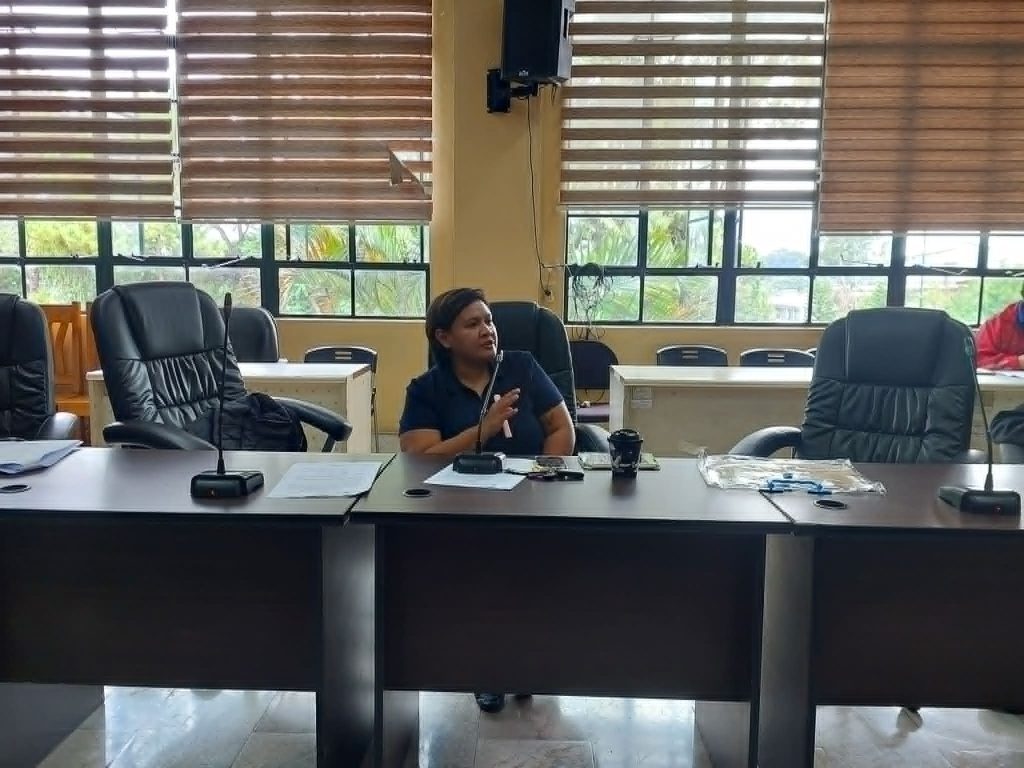
Following a recent coordination meeting, PDRF and the city government agreed to establish a working group that will identify project targets, monitor progress regularly and help ensure accountability throughout the implementation of the project.
“We also want to understand how the project will be beneficial for the city,” Aspuria said. “Whatever we commit, we should have targets that are hit.”
She said sustainability has been built into the project by encouraging the active participation of the city government, the City Council and other stakeholders from the outset to foster local ownership.
The project will also help connect conservation-based livelihood initiatives with potential markets to improve their long-term viability after external funding ends.
“We don’t want livelihood projects that end once donor support is gone. There has to be market matching so communities can continue earning while protecting the environment,” Aspuria said. (JDP/RGA-PIA CAR)
Article by Rod Asurin | Philippine Information Agency
Photo by Philippine Information Agency